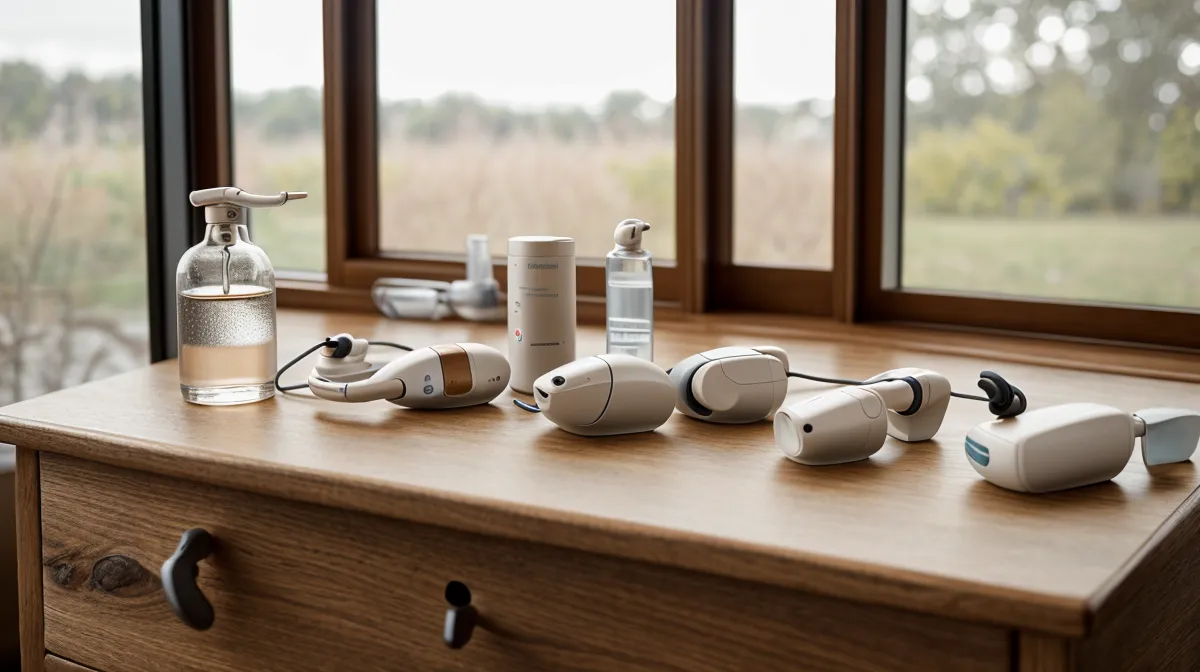
The refrigerator in my kitchen has three different sounds — the compressor, the ice maker, and a faint rattle in the door seal — and for a few years I could only hear one of them. That's not a complaint about the appliance. That's thirty years of school hallways and gymnasiums catching up with me, and it's the reason I finally started paying attention to my hearing health instead of just nodding along in conversations and hoping nobody noticed.
I'm not a doctor, an audiologist, or any kind of health professional — just a 56-year-old retired school principal who started a supplement log because guessing wasn't working anymore. This post contains affiliate links, and buying through them earns me a commission at no extra cost to you. I mention Zeneara here because I've actually used it, alongside my hearing aids, for long enough to have an opinion. Talk to your own doctor before you add anything new to your routine.
Thirty Years of Noise I Shrugged Off
Middle school cafeterias at lunchtime are loud in a way that's hard to describe to anyone who hasn't stood in one for three decades. I didn't wear hearing protection because nobody around me did, and because the noise felt like part of the job, the same way the ache in my knees felt like part of getting older.
What I didn't expect was how much I'd come to lean on lip-reading without realizing it. Somewhere in my forties I started catching maybe half of what people said and filling in the rest — nodding, smiling, hoping the gaps didn't show. That's Presbycusis, the term for hearing loss that creeps in with age, though nobody handed me that word until a hearing test years later. It took missing my granddaughter's first sentence at a family dinner, the background chatter swallowing her whole, before I understood the nodding was costing me things I couldn't get back.
Why Weren't Hearing Aids Enough?
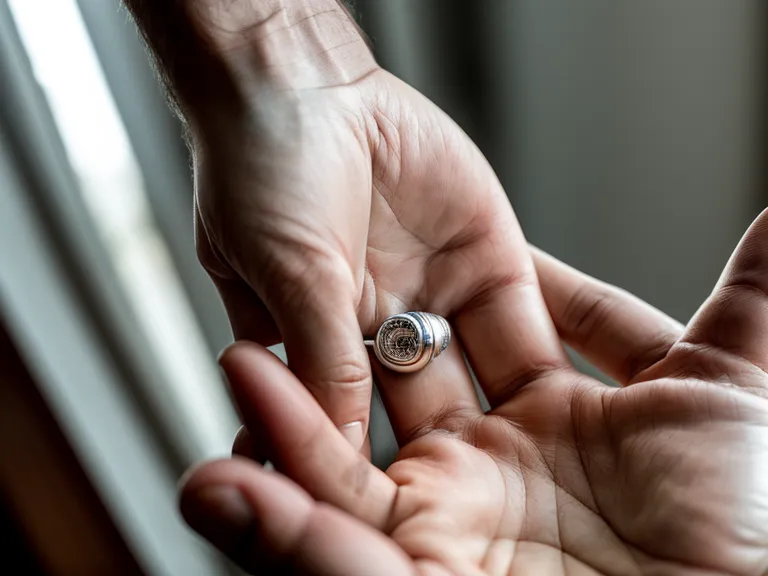
Every morning I still go through the same small ritual — a fresh size 312 battery, the brown tab peeled back, that little pop of air before the case snaps shut. It's a habit now, barely worth mentioning, except that it used to feel like the whole solution, and it wasn't.
A woman named Beatrix Haverford, who I met in a waiting room years ago and still trade notes with, told me back then that the first three weeks with new hearing aids feel worse before they feel better — your own voice sounds strange, ordinary sounds seem too sharp. She was right, and knowing that ahead of time made the adjustment something I could sit through instead of panic about.
The bigger problem wasn't volume, it was clarity. My hearing aids amplified everything without discriminating — the refrigerator, the air conditioner, a voice across the table — and my brain did all the sorting. Audiologists call that struggle to isolate one voice in a noisy room the cocktail party effect, and it doesn't get easier with age. I'd already been taking Audifort as a daily baseline supplement, which took the edge off the general fuzziness, but I still felt like I was working harder than the moment should require.
By evening, especially after a long phone call, I'd feel a specific kind of tired that had nothing to do with being sleepy — the exhaustion of straining to follow a conversation for an hour. I started keeping a log, a plain notebook where I'd jot down whether restaurants, phone calls, or family gatherings felt easier or harder that week. It wasn't scientific. It was just me trying to tell the difference between actually hearing better and getting good at reading faces.
The Decongestant Detour
Before I looked into supplements built for hearing specifically, I tried something that had nothing to do with my ears. A drugstore nasal decongestant spray, used for about two weeks, because I'd convinced myself that clogged sinuses were behind the muffled feeling and that clearing them out would clear up my hearing too. Here's the thing about a decongestant spray: it treats sinuses, not ears. It didn't help. Not even a little. I mention it because it's a good example of how easy it is to chase the wrong cause when you're desperate for a fix.
Bringing Zeneara Into My Hearing Health Routine
A friend from my old principals' association days, Kwok-Wing Lau, is the kind of retired science department head who wants to see the reasoning before he'll believe the result, and when I told him I was adding another supplement to the mix he asked exactly what I expected — what was actually different about this one. My honest answer was that Zeneara seemed aimed at the mental side of listening rather than just amplification, and after years in loud hallways, that distinction mattered to me.
I'm not going to pretend I understand the inner workings of my own ears well enough to explain how any supplement is supposed to work at that level — my cochlea has been doing its job since before I was born, and I only started thinking about it once it started struggling. What I can report is what showed up in my log: fewer headaches after long meetings, a little less of that specific tired feeling by early evening.
For more on how this whole process started, I wrote separately about finding the right support after years of school noise, back when I was still sorting out what actually helped from what just felt like it should.
Hearing aids catch the sound, and supplements seem to help with the work of sorting through it afterward — two different jobs, which is part of why I never stopped wearing my aids just because I started taking something new.

The Pool Deck Problem
My grandkids take swim lessons at the Braintree YMCA, and the pool deck there might be the hardest listening environment I regularly put myself in — tile and water and a ceiling that bounces every sound back at you twice. Coaches shout instructions, whistles go off, a dozen conversations echo off the same hard surfaces at once, and for years a space like that just about ended my ability to follow anything anyone said to me directly.
Background noise like that used to be where my hearing loss showed up first and worst, long before quiet rooms gave me any trouble — restaurants, gymnasiums, that pool deck. It's a common enough pattern that I don't think it's unique to me, though I won't pretend to know the mechanics of why noisy rooms hit hardest.
What the Logbook Showed by Week Seven
The clearest sign came somewhere around week seven of keeping Zeneara in the routine, at a small restaurant with my wife on an otherwise ordinary evening. The waiter ran through the night's specials at a normal pace, no slowing down, no leaning toward our table, and I caught every word of it without tilting my head or asking him to repeat anything. My wife noticed before I said a word about it — she just looked at me across the table like she'd seen something.
That's the kind of thing that doesn't show up on a hearing test but shows up plenty in a logbook, which is really just a plain notebook where I mark down whether phone calls, dinners, and errands felt easier or harder that week — the same one I described in more detail in my simple logbook for Sunday dinners post. Around week seven, the "easier" entries started outnumbering the "harder" ones, and they've mostly stayed that way since.
Where Things Stand Now
Rough days still happen — a faint ring in one ear some evenings that I don't dwell on, wind hitting the hearing aid microphones just wrong, a crowded room that still wins sometimes. At a retirement party earlier this year, I misheard a colleague's story so completely that I laughed at exactly the wrong moment, and it stung in that particular way mishearing does — like proof you're missing pieces of your own life, not just words.
Isolation is the part nobody warns you about — not the hearing loss itself, but the slow retreat from conversations you stop trying to keep up with. I still show up to the dinners and meetings and phone calls I could easily skip, because skipping them is exactly how that retreat starts.
Ingredient lists on the backs of supplement bottles are their own rabbit hole, one better suited to its own post than a paragraph here, and I don't pretend to have that expertise. Prevention matters more than any bottle does, though, and I wish someone had told thirty-year-old me to take hallway noise seriously before it cost me anything.
None of this makes me an expert — just a grandfather with a notebook and an opinion earned the slow way. Zeneara has been part of what's working for me, alongside the aids and the logbook and paying closer attention than I used to. It won't be the right fit for everyone, and I'd rather you decide that for yourself than take my word for it. If you're tired of nodding along at your own dinner table, Zeneara is worth a look — see if it does for you what it's done for me.